Using Depth of Field For Storytelling

November 16, 2010

in Lenses,Resources,Tutorials

With HDSLRs, and now large sensor video cameras, those of us who shoot video have blessed with the ability to shoot insanely shallow depth of field (DOF). For the last 12 months we have been bombarded with videos shot at F1.8 and faster, and while shallow DOF can look gorgeous I believe a lot of people have not fully harnessed the power, and use, of depth using their lenses aperture.

So rather than complain about it, here are some points I have been learning about DOF in my journey as an ever-aspiring filmmaker.

1. Don’t be afraid of Deep DOF
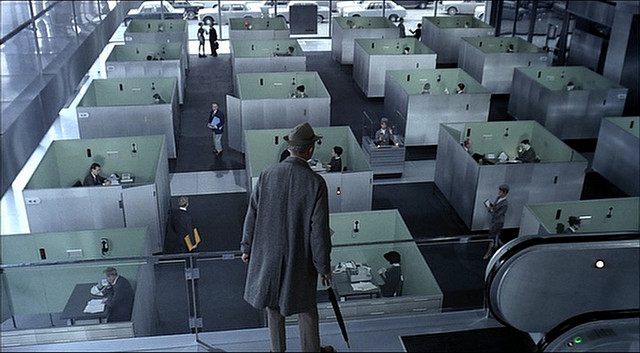
Perfect Deep Depth of Field shot in "Playtime"

“To make your video look like film use shallow depth of field.” This is a line I hear a lot, especially from DSLR shooters and it could not be farther from the truth. Yes, films use shallow DOF but that does not make them films. Depth of field is a tool with which to sculpt your shots. So just because we can now shoot at F1.2 does not mean we should. I know most of us are recovering from Large Sensor Deficiency Syndrome but with a little education and therapy, we can move on.

2. Understanding Selective Focus

Selective focus is simply using DOF to isolate a subject. The shot below is from Defiance and is an excellent example of selective focus. While there are subjects walking behind and in front of Daniel Craig’s character, our focus is on him:
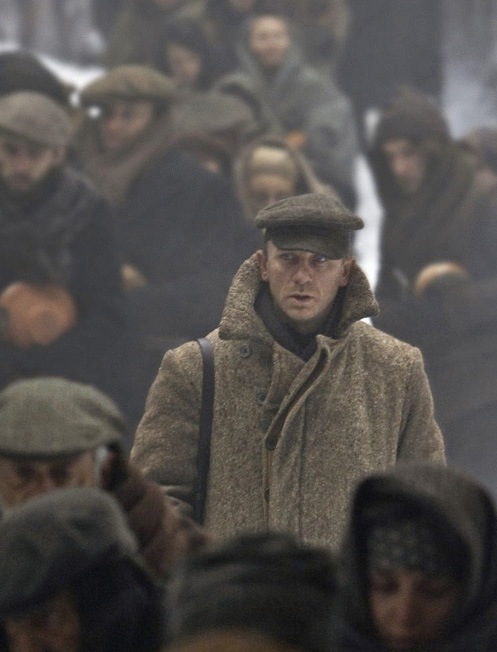
Excellent use of selective focus in DEFIANCE

Using this method you can direct the focus of your audience toward whatever element you desire to showcase. Thus subconsciously telling them “this is important.”

Its also important to be thinking about how shallow to shoot. Study this shot from The Social Network:

Perfect amount of depth in THE SOCIAL NETWORK

We are instantly focused on the character in the center of the shot. As we examine it, we notice to the camera right another key character.

Now look what happens when we look at a shot that is in all ways identical to the last, except for a difference in DOF:

DOF Overkill

In this shot the DOF is far shallower than the first. Two problems become apparent. The first is how odd and unnatural it looks. The people on the left are now unrecognizable blobs, and the character center screen sticks out too much. This is a BIG problem. The last thing you want to do is distract your audience and remove them from the story. The second issue with this shot is that we can no longer easily discern who the other character is. Are these the two best friends? Or is the character on the right a complete stranger? We now see how critical the use of DOF is for selective focus.

3. Don’t Create Muddy Shots

Something I see a lot on Vimeo and YouTube is “muddy” shots. These are shots where someone shoots wide open at F2.0 or faster and part of the subject is out of focus, creating a “muddy” look. Here is a shot from Abortion, a short I shot last year where I made this mistake:

Slightly "Muddy" DOF

Notice the talent’s right eye (our left) is just slightly out of focus. click the image to enlarge. While not terribly noticeable on a computer screen, when displayed on the big screen it becomes far too distracting. After making that mistake I created two rules for myself:

  • Rule One: When photographing peoples faces I make sure their eyes and face are in focus. Its ok if the hair goes out a bit.
  • Rule Two: If I do put one eye out of focus it has to be at least a 20% difference from the one in focus. This clearly separates the two. When the eye is just out of focus it becomes distracting.

There are a few exceptions but for the most part I find these rules to help keep my shots from becoming distracting.

People aren’t the only thing to keep from shooting “muddy.” Here are two simple shots that show the difference between a muddy shot and a clear one:

The first shot of the showerhead is the clear one. While the handle is out of focus, it is consistently out all the way down. And the sprayer head is completely in focus. But notice in the seconded shot, half the showerhead is in focus and the other half is out. You can tell it looks sloppy when compared with the first shot. See the difference? The same goes for the book text. Notice the first shot the text is readable and you can tell its a page from a book. While the second shot does have the text in focus, you can barely tell what the rest of the image is. Its all cloudy. If we don’t show that it’s a page from a book the audience may spend time trying to figure out what it is and not read it. Which brings us to our next point.

4. Don’t Confuse Your Audience

Something else to consider when setting your DOF is scene clarity. A great example of good shot clarity can be seen in this shot from Inception:
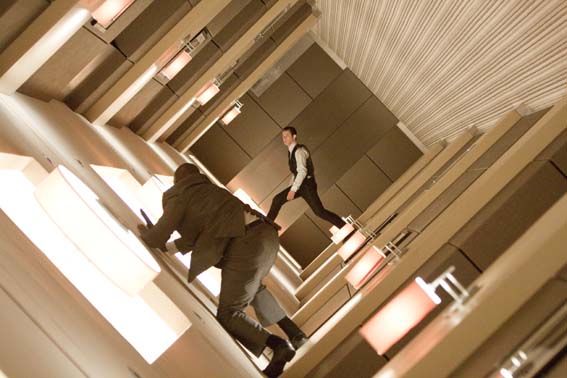
Clear deep focus shot in INCEPTION

This is a shot from an obviously complicated scene. In situations like this shooting with deep DOF keeps the layout of environment clear to the audience. Again we don’t won’t to remove the audience from the story by disorienting them, which you can see with this scene would not be hard to do.

Using DOF to Create Intimacy

When you really think about it, DOF is just another framing edge. Just like left, right, top, and bottom of the frame can be used to isolate the scene; DOF can be used to control how deep a scene is. This gives the cinematographer the option to limit space. Take for example a parking lot. While in reality it may be a large space, using shallow depth of field one can create a very small, intimate scene with a character.

Check out this shot from Dear Frankie:
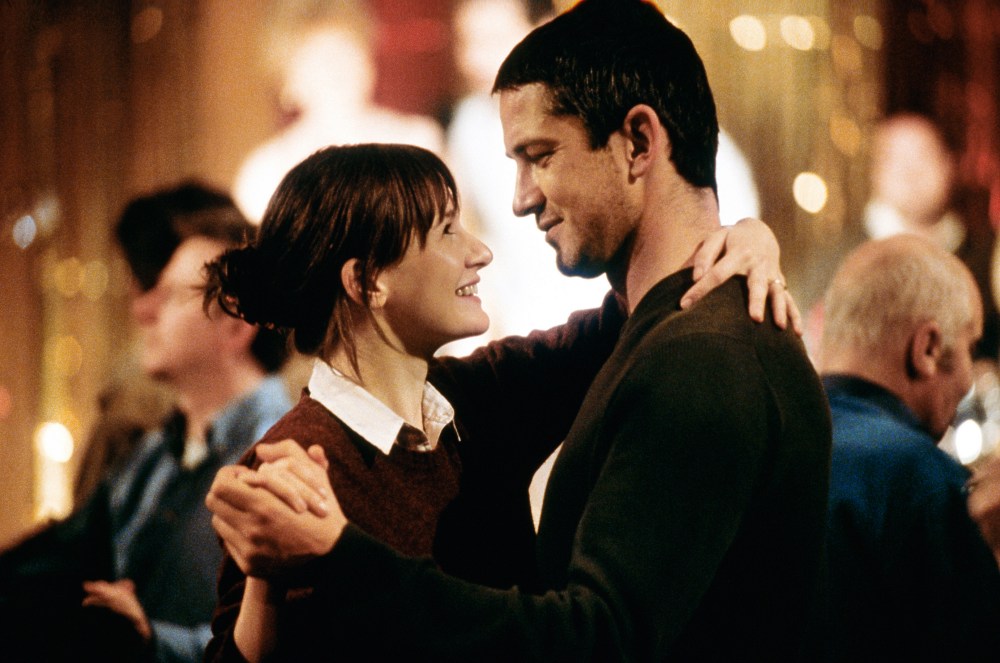
Shallow DOF Creating an Intimate Scene in Dear Frankie

In this scene our two characters are dancing on a large set. Using shallow DOF Cinematographer Shona Auerbach has created a very intimate scene. By putting other people and elements out of focus, he has created a moment that, as viewers, we can really focus and connect with the characters.

Conclusion.
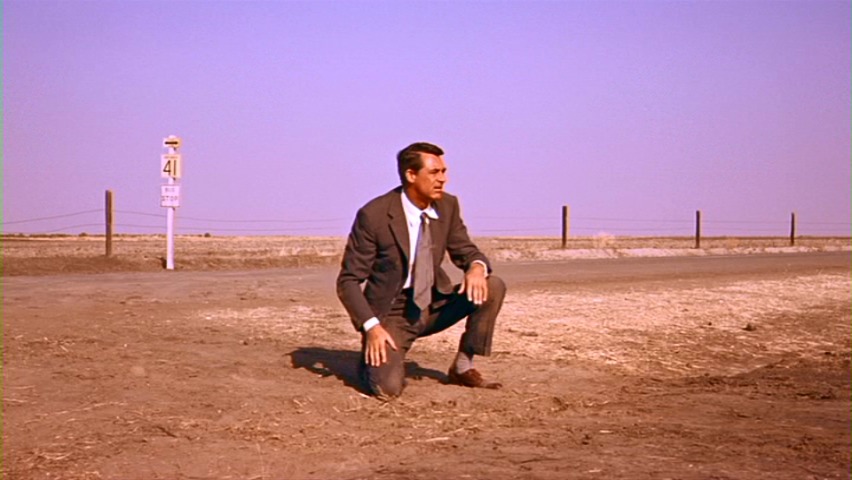
So you can see how powerful DOF can be when used properly. Next time you lens your camera and choose your aperture, take some time to think about depth. Ask yourself the following questions:

  • What am I shooting?
  • Where am I directing the eyes of my audience?
  • Is this depth confusing?
  • How intimate is this scene?
  • Why am I using this depth?

So get off the computer, grab your camera and some friends, and tell a story!

Copyright Information:

The images use in this article have been displayed in the light of the following:

Copyright law contemplates fair use of a copyrighted work without permission shall be for purposes such as (1) scholarship and research, (2) teaching, and that such fair use will not result in the infringement of a copyrighted work (Citation).

  • http://remarkableentertainment.com Ryan Hall

    If I could add a tip, when focusing using a shallow DOF, you should usually focus to your character’s eye that is on the far side (your key light side). If focusing on a character or subject’s face, you should measure your focus to their eyes, because it is the natural part of the face your brain looks at first. It will aid in the natural look of your footage.

  • http://dslrvideoshooter.com Caleb Pike

    Thats a great tip Ryan, thanks!

  • http://www.nachomartinez.desevilla.info NachodSevilla

    Genial explicación…

  • http://2duce2.com Eugene

    Freakin great stuff Caleb!!

  • http://www.kerstenbeck.com Erik Kerstenbeck

    Hi

    Great article and thoroughly enjoyed your insights. I like to use maximum DOF to tell stories via my images. This shot of a pier in SanFran, with the leading lines, directs you to the Tall Ship in the Marine Layer. This was also a 3 shot HDR just to get the dark details of the wood in the pier as well as the Tall Ship in the distance.

    http://t.co/TmJB9Ej

    Regards, Erik

  • Lu

    Hi Caleb.

    Very educational article – thank you!

    Would you be able to summarize a few tips for beginners
    as to how you go about setting up focus and DOF in various situations?

    A few tips about working with shutter speed, aperture, focus in DSLR video?

    Lu

  • http://www.dcharry.com David Charry

    Fantastic article Caleb!

    Further enforcing what Ryan says….it is vital you focus to the eyes!! Be careful not to accidentally be focused to the tip of someone’s nose when you’re shooting with shallow DOF…an in focus nose and out of focus eyes is awful….I’ve made this mistake before. It’s also more aesthetically pleasing to have both someone’s nose and their eyes in focus. Out of focus noses are still a little bit awkward.

  • http://dslrvideoshooter.com Caleb Pike

    Thanks David. Completely agree. The way I see it is if the nose is out and the eyes are in stop it down a lil. Unless its a ECU (Extreme Close Up for non-columbia students ;] ) the nose looks better in focus with the rest of the face and eyes.

  • http://dslrvideoshooter.com Caleb Pike

    @Lu, Sure thing. I have a podcast on shutter, aperture, ISO and how they relate/how to use them.

  • Lu

    Hi Caleb.

    Which podcast specifically shows the relationship between
    the main variables in DSLR video shooting?

    Link please?

    Thank you…Lu

  • Jon

    Indeed shallow depth of field is now abused. Some people will just have to get it out of their system. You should always ask yourself why with everything you do. This includes DOF.

  • http://www.remarkableentertainment.com Ryan Hall

    Another thing, use of DOF also plays into the genre you’re shooting. Comedies tend to have deeper DOF, while Drama’s uses more shallow DOF shots.

  • Koen Folkerts

    Good article, very helpful!

  • http://www.troubadour-blues.com Tom Weber

    Shallow depth of field is the flavor of the month right now, reflecting among other things very clever product marketing by Canon. It is appropriate for some things and not for others — I cannot imagine “Citizen Kane” with shallow DOF; it would destroy the whole aesthetic of the film. The current trendiness of shallow DOF reminds me of the Steadicam fad in the ’90s, where it was being used for literally everything.

    What the article doesn’t mention is that the focal range isn’t split evenly. 1/3 of it is in front of the subject, and 2/3 is behind — making focus on eyes, for example, very critical. What I dislike about shallow depth of field is that it encourages the use of static shots with little subject movement, because of the risk of subjects moving out of focus.

  • http://www.possibilitylab.co.uk Tom Brereton-Downs

    Absolutely fantastic article. Glad I’ve come across you (the power of social marketing eh?). Looking forward to reading more.
    Regards,
    Tom

  • http://dslrvideoshooter.com Caleb Pike

    @Tom w. I Never said shallow DOF was not to be used. But it would be a shame for people to not understand how to use it.
    Just like any other storytelling tool, it has it’s place.

  • http://dslrvideoshooter.com Caleb Pike

    @Tom B. It sure is!

  • http://rilstone-naturephoto.blogspot.com/ Smilin’ Dave

    Excellent article. This concept of using DOF to help tell a story applies to my wildlife shoots as well. All well and good to isolate a camouflaged nature-subject from a busy background, but not too much in order to maintain a sense of the environment it lives in.

  • http://www.levithornton.com Levi Thornton

    A much needed article for a lot of us DSLR shooters especially me. I’m a victim of using too much shallowness.

  • http://fudgesiclefilms.co.tv/ Zack

    Nice post :)

  • http://danmccomb.com Dan McComb

    Great reminders. One bug: I tried to play the shower video, and got an error “private video.”

  • http://dslrvideoshooter.com Caleb Pike

    Oops. Try now. Thanks!

  • Roland Comfort

    When I bought my new Canon 7D this summer I jumped on the fast lens train with everybody else until I figured out that a 50 mm lens at f 2.8 shooting a subject at 5 feet has a depth of field of less than 4 inches. Everything in front or behind will be out of focus. You have to go to f 8 to get about a foot of DOF, and f 11 to get 15 inches DOF. My advice . . . sell your fast lenses and buy some lights – I did. Note: For years, I complained about the autofocus on my Canon XL1s. Guess what – I was shooting at about f 4 zoomed in to about 150 mm at about 10 feet resulting in a DOF of only about 1 inch. No wonder the AF was hunting its little brains out. Sorry Canon, I was the idiot, not you. Everybody under the age of 30 probably learned video shooting on camcorders, pocket cameras and phonecams, all with little lenses that have built-in DOF Guess we will have to learn to shoot with our Grandpa’s 35 mm SLR. That means learning DOF charts, and yes, probably adding light on indoor shots.

  • Arthur

    Thank you for clarify some good point !

  • Dan

    Excellent article! With DSLR video starting to become more popular, shallow DOF is overly utilized. It’s not about just being able to create certain looks — it’s about knowing when and how to use them.

  • http://www.facebook.com/tyler.gates Tyler Gates

    Great post. Knowing the “why” is the difference between emulating and creating. I’m learning a ton!

  • Pingback: Shallow DOF « ajck

  • Matt Woodroffe

    Hello
    Very much enjoyed this article, and came to similar conclusions myself after watching and observing it in the films I have been watching lately.
    Anyway, just wondering what you think of shooting a focus pull, to another focus pull, to another focus pull? I am shooting a film this weekend and just realised I have 3, one after another storyboarded. Thinking this will probably be overkill and hate it when things stick out, but just wondering if you have come across any examples you can think of and point me to?
    Thanks
    Matt

  • http://twitter.com/studio3wd Abadeu Madyun

    Loved it, just got a basic kit, and can tell the difference!

  • Chris Westerström

    That was a great article, thanks so much

  • http://www.facebook.com/ddkofficial Edwin DeLeon

    Thanks was helpful

  • http://twitter.com/dmuvii Momokz

    your information is invaluable!

  • http://brucephilpott.com/ Bruce Philpott

    Thanks for posting this, Caleb. I get VERY tired of seeing OOF mush being considered “art” in both stills and video. I’ll refer a lot of people to this article.

  • Pingback: Chelsea «

  • Qzyxya Ayxyzq

    Thank you so much. :D

  • Qzyxya Ayxyzq

    Yeah that makes sense, but not everyone has key lights. 

  • Qzyxya Ayxyzq

    Very true.
    Older movies with dialog usually have both faces in focus, but newer movies tend to isolate the faces. 

  • Pingback: Depth of Field as a Storytelling Device | Sprocket Launch

  • Aurora

    Great article. Nicely illustrated.

    I thought myself that the forum parrot talk about the greatness of shallow focus is suspicious. But it is nice to see it articulated so well. Interestingly, the article on the <a href="http://www.shutterangle.com/2012/cinematic-look-aspect-ratio-sensor-size-depth-of-field/"cinematic look I was just reading before coming here also states the importance of careful depth of field choice. But your examples put all this in perspective. 
    Thanks.